Arts & Crafts Along Italy’s Island Roads
Arts & Crafts Along Italy’s Island Roads

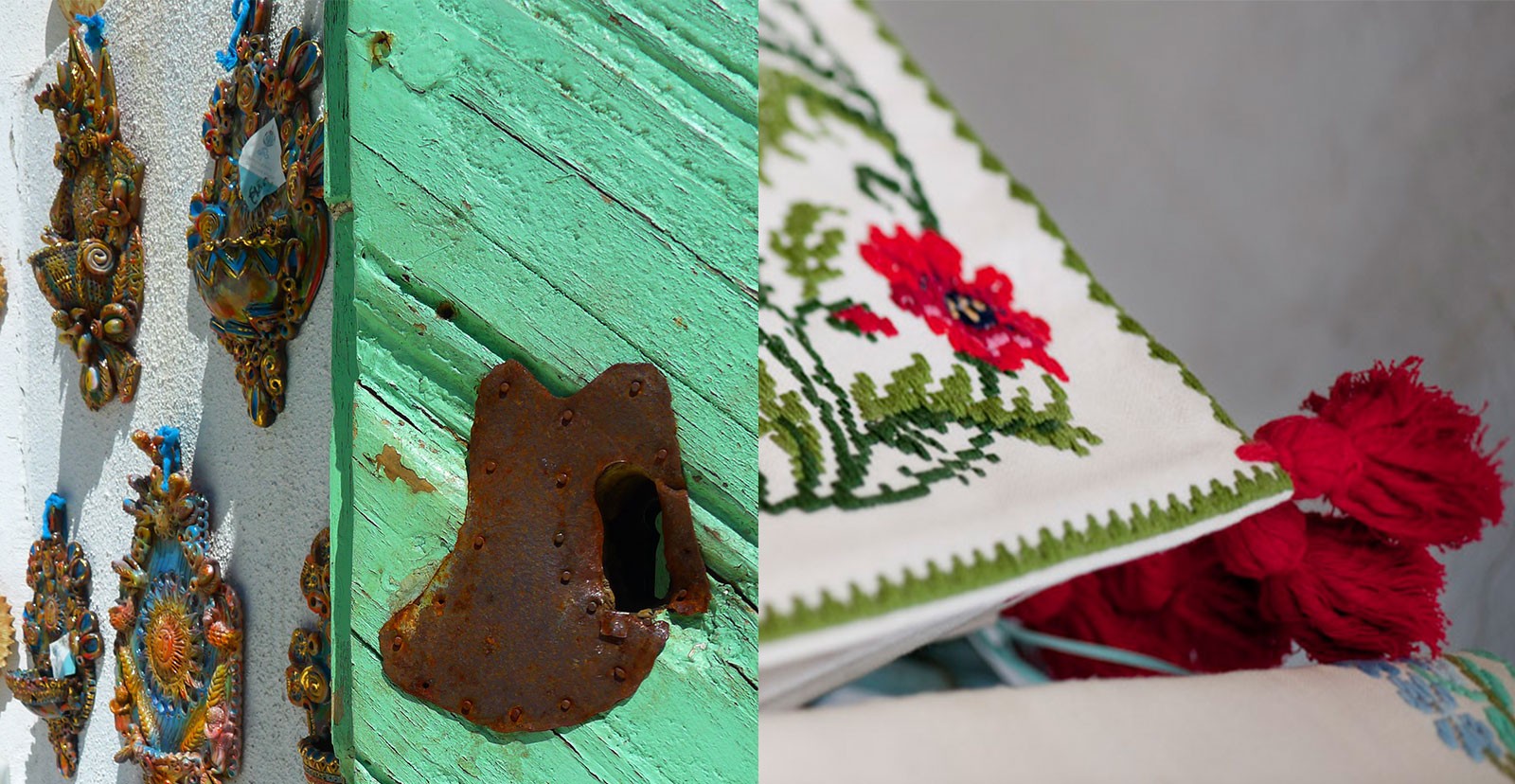
It’s not always just about the food. There are lots of other fascinating island treasures to discover on a bike tour. Did you know that Sicily, Sardinia, and Corsica are home to a vast variety of handicrafts, artisan work, folk art, and other forms of artistic heritage? This includes weaving, jewelry, knives, baskets, wool, musical instruments, ceramics, and much more. When we’re out of the saddle and roaming about, we can’t wait to delve into some of the brilliance and workmanship (or workwomanship) reflecting the beauty of the island and people who live there.
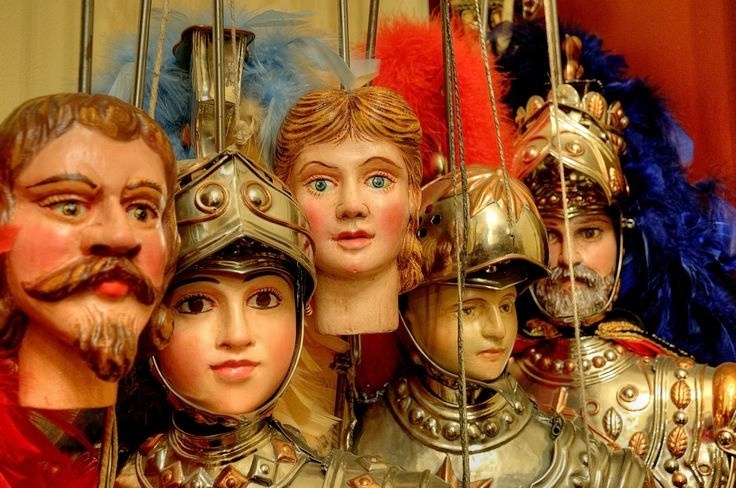
1 – Inspirational puppets and colorful puppet theater in Sicily.
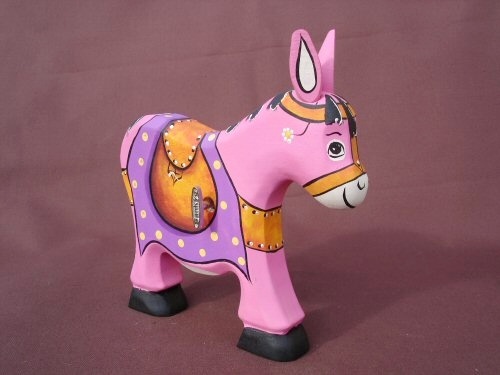
Popular since the Middle Ages, marionettes are still considered an important part of Sicilian folk culture. A handful of marionette makers still work in Sicily, particularly in Palermo, Catania, and Messina, selling these gorgeous creations as gifts. The Opera dei Pupi (Opera of the Puppets) is the marionette theater that originally decorated the sides of donkey carts with intricate, painted scenes. Today, the same tales are enacted in traditional puppet theaters featuring hand-made marionettes of wood. Palermo is still a great place to see this.
2 – Knives. These Islanders take them seriously.
In Sardinia, the knife (called resolza) is a sign of everlasting friendship and loyalty. Places like Pattada in the north and Arbus in the south west of the island are worldwide famous as the home to the master knife artisans amazingly skilled at crafting these elegant–and sharp–items. A must-have for collectors and for shepherds alike. The Corsican shepherd’s knife (called curnicciolu) has a curved handle, and is very smooth, with a slightly concave blade enabling you to cut with a snatch–yikes.
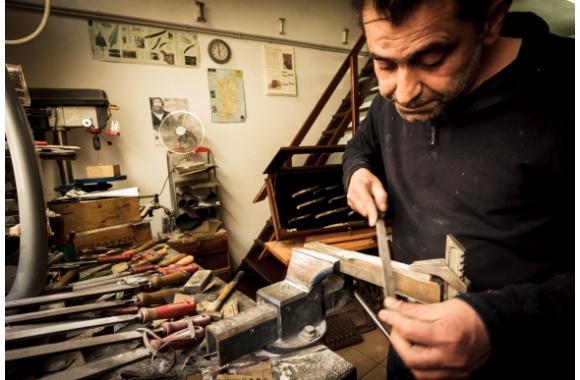 Photo: Stefano Bellu
3 – Baskets in Bosa for every occasion.
The art of basket weaving is quite common on this island. Here, the (mostly women) use raw organic material such as local asphodels, reeds, and straw. Colorful baskets of every size and shape are typically used in weddings, baptisms, or just everyday life to store bread and sweets. Flussio in the Bosa area of Sardinia (where we stay on our Mediterranean Island Hopping and Savor Sardinia trips) is the place to discover the work of the most talented female basket artisans.
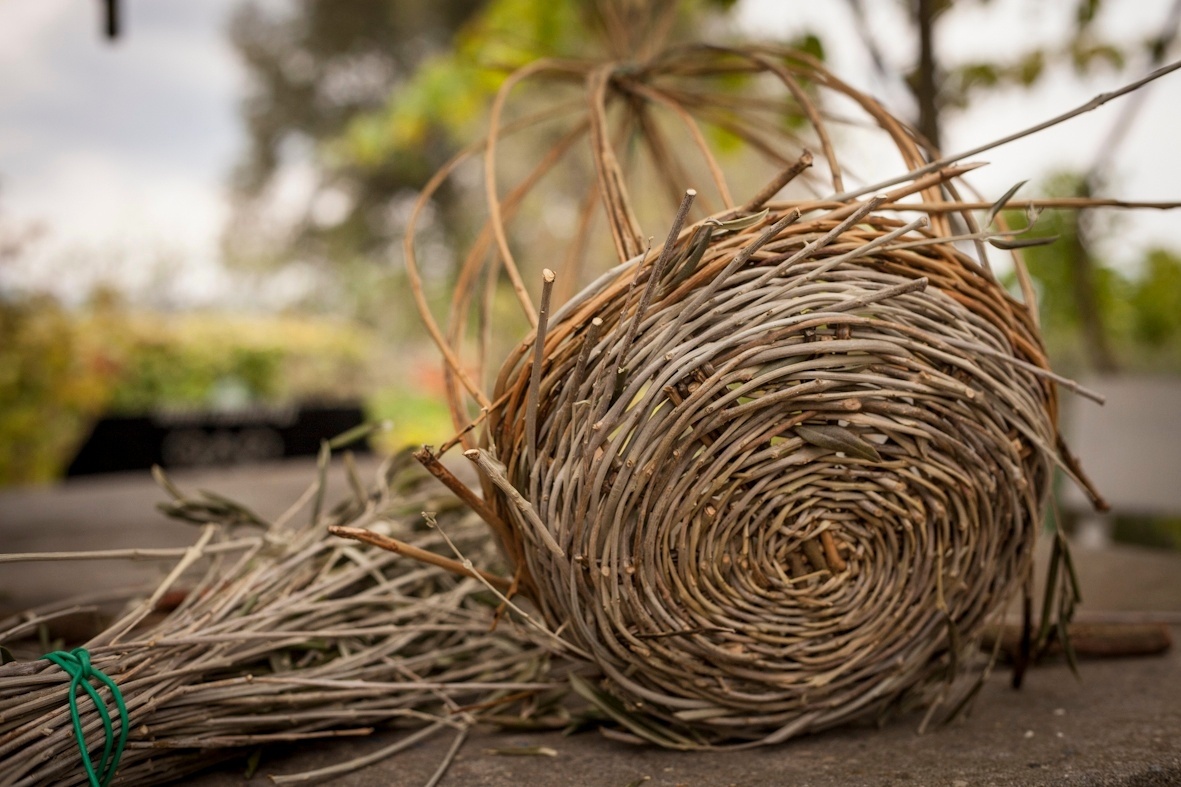
Photo: Lucia Baldini
4 – Ceramics in Caltagirone, Sicily.
The Caltagirone ceramic technique was influenced and perfected by the Cretans, who introduced the wheel during the Greek colonization of Sicily in the 8th century BC. In the 9th century the Arabs introduced the glazing technique, which rendered the ceramic objects impermeable to water. The ceramic tradition is visible in every part of the town, not only in its numerous shops selling ceramics and maiolica, but also throughout the city’s architecture, balustrades, vases, and other decorative ceramic features enhancing the streets of the baroque town. The ornamental patterns on a white background are similar to the antique Sicilian embroidery and fabric decoration in violet, green, orange-yellow, and cobalt blue colors, which are reminiscent of the bright Sicilian landscapes.
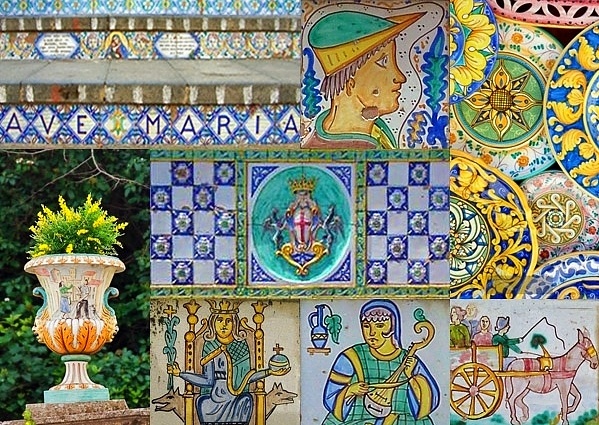
Photo: courtesy of Slow Italy
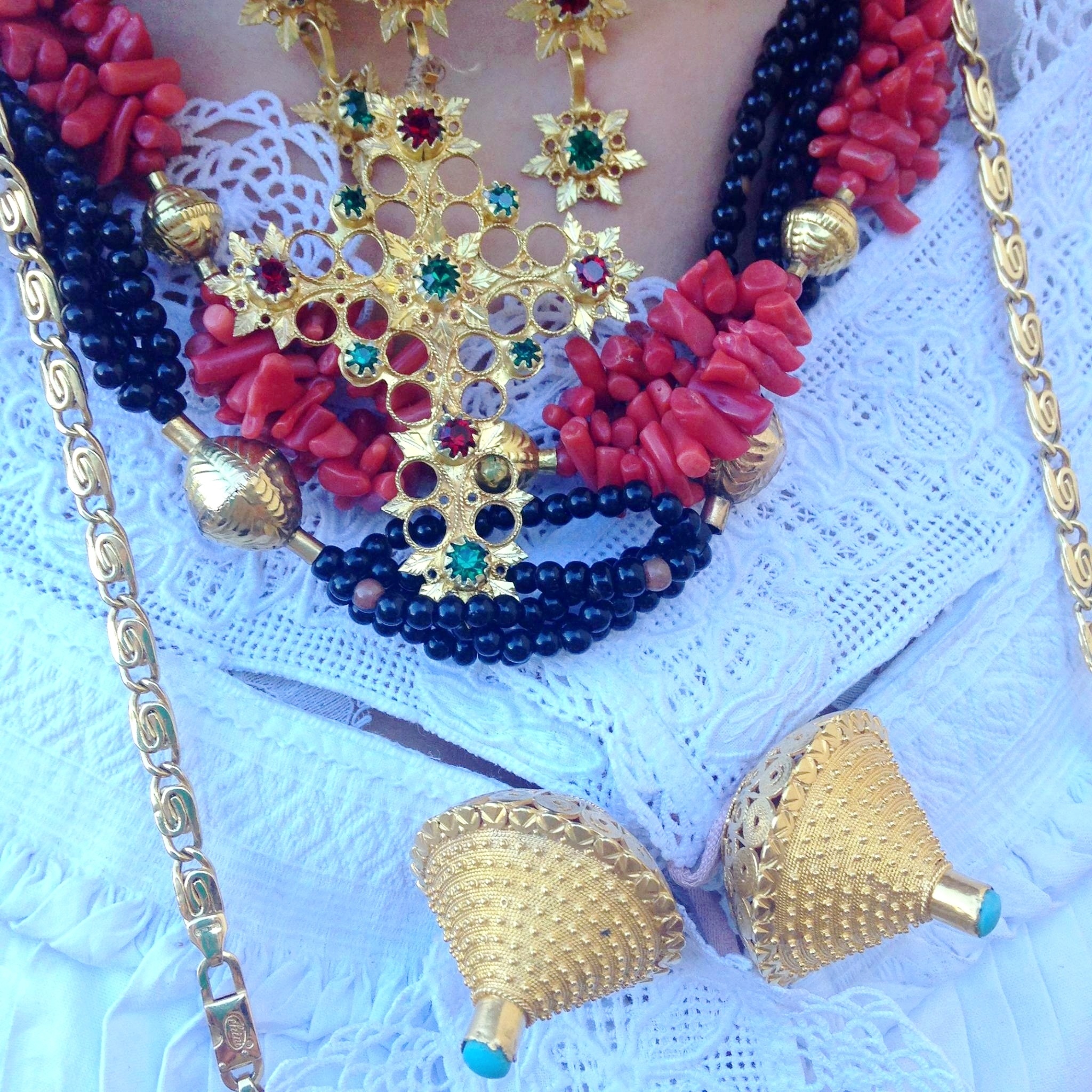
5 – The jewels of Sardinia: the filigree and coral traditions.
Sardinian women often have the occasion to don themselves in local costumes, including traditional jewels. Buttons, cuff-links, necklaces, and rings are all part of this fine, and quite delicate, artisan heritage. Crafted in various locations across the island, these precious creations are made with silver, gold, and coral. In Dorgali and Cagliari, we see how artisans perform the local technique of filigree, and in Alghero, we discover the of art of red coral jewelry.
 Photo: Carol Sicbaldi
The island’s sheep’s wool is knitted in gorgeous natural colors. In little specialized workshops, you can buy shawls, scarfs, jackets, sweaters, and socks. The inspiration for the patterns are drawn from the rich Corsican heritage: mosaics, trees, villages, and animals. Colors are earthy: gray, beige, ecru, and black. There are four stages to the process of artisan wool manufacturing: knitting, weaving, spinning, and dyeing. Only plant-based dyes are used for the different colors of the beautiful cloth fabrics.
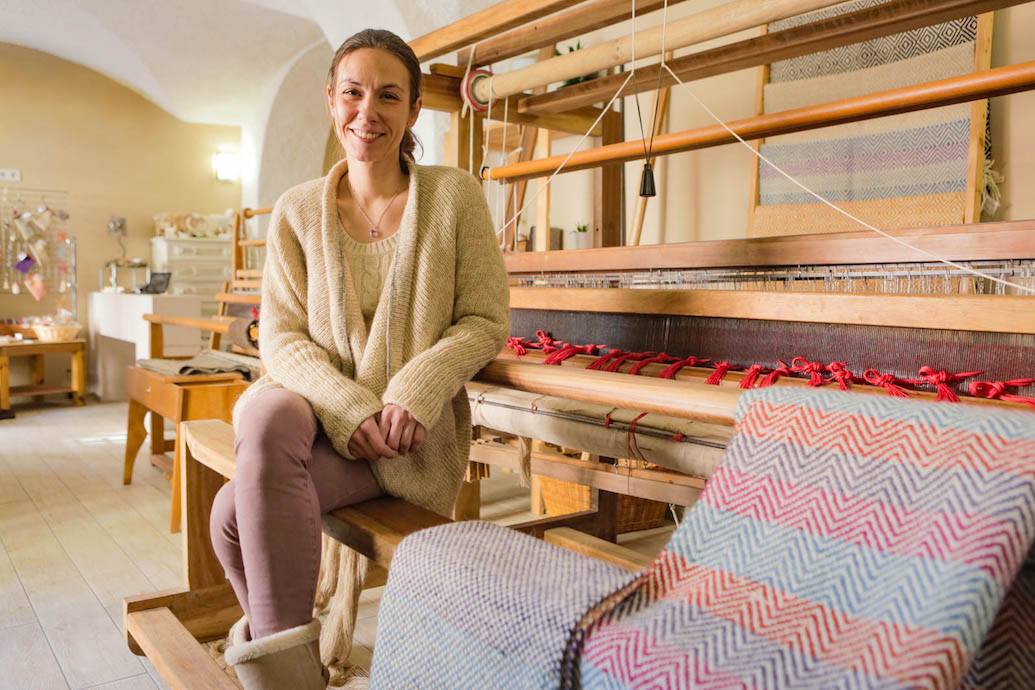
Photo: Sandrine Tricon | Lana Corsa
7 – Power to the Sardinian women who weave carpets that tell a story.
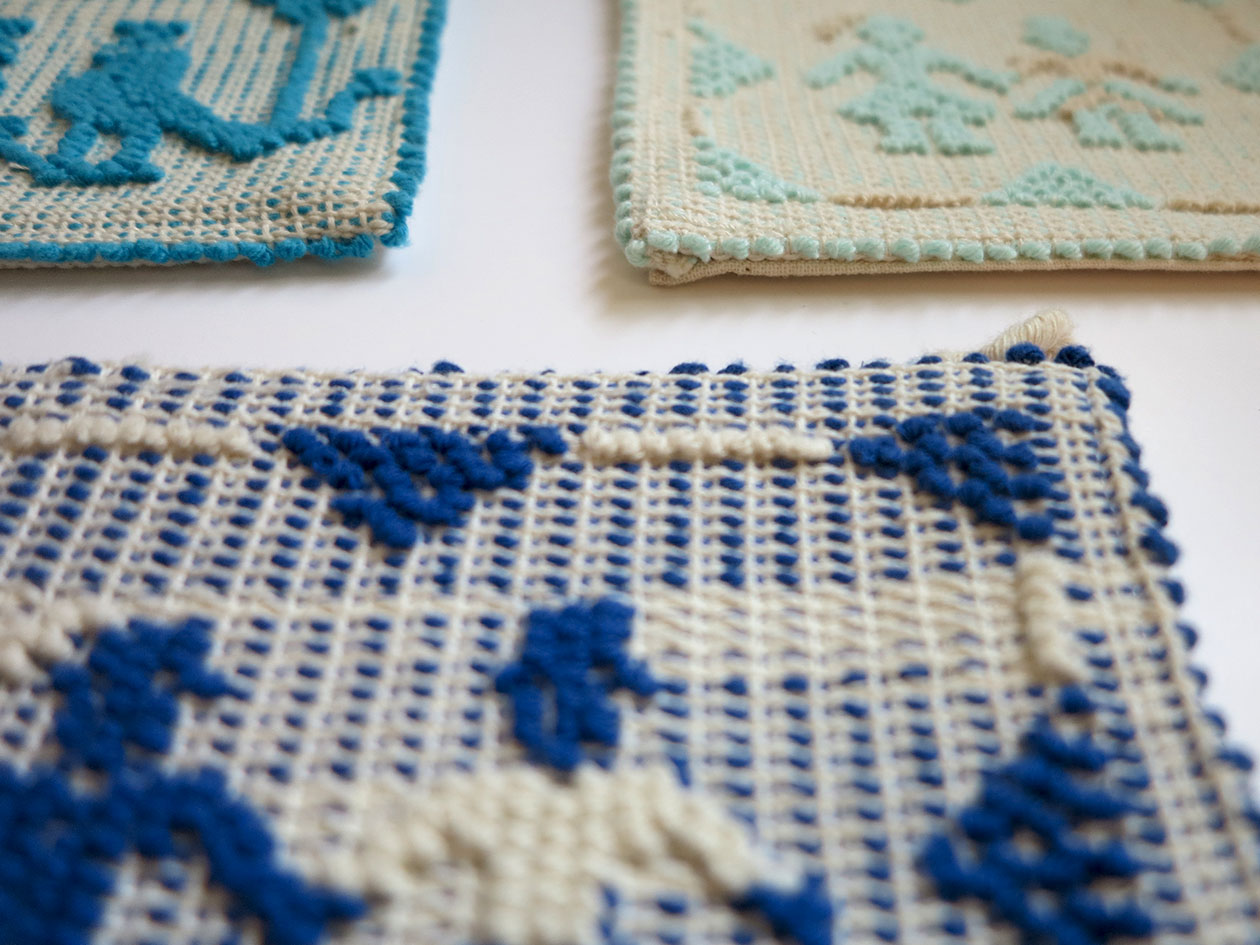
Across the island, we have a remarkable tradition of carpets and textile handicraft. Sardinian textile weaving patterns are made with more than 100 symbols and several central decorative elements. Each one has an ancient story—magical, evocative, sometimes also funny. Top destinations for carpets are Samugheo close to the west coast and Nule in the interior of the Island. The community of weavers in Samugheo is predominantly run by women. Regardless of social status or position, every girl, since her childhood, was due to learn how to weave. This skill is handed down through generations of women and the traditional motifs and ancient techniques remain well preserved today. The weavings are patterned with small raised bumps of thread, called pibiones, which means “”grape seeds”” in Sardinian dialect. It’s a painstakingly long process; the weaver has to count all the threads to be able to position the pibiones to match her pre-designed pattern on graph paper…one pibiones at a time. This amazing video tells the story of these remarkable women.
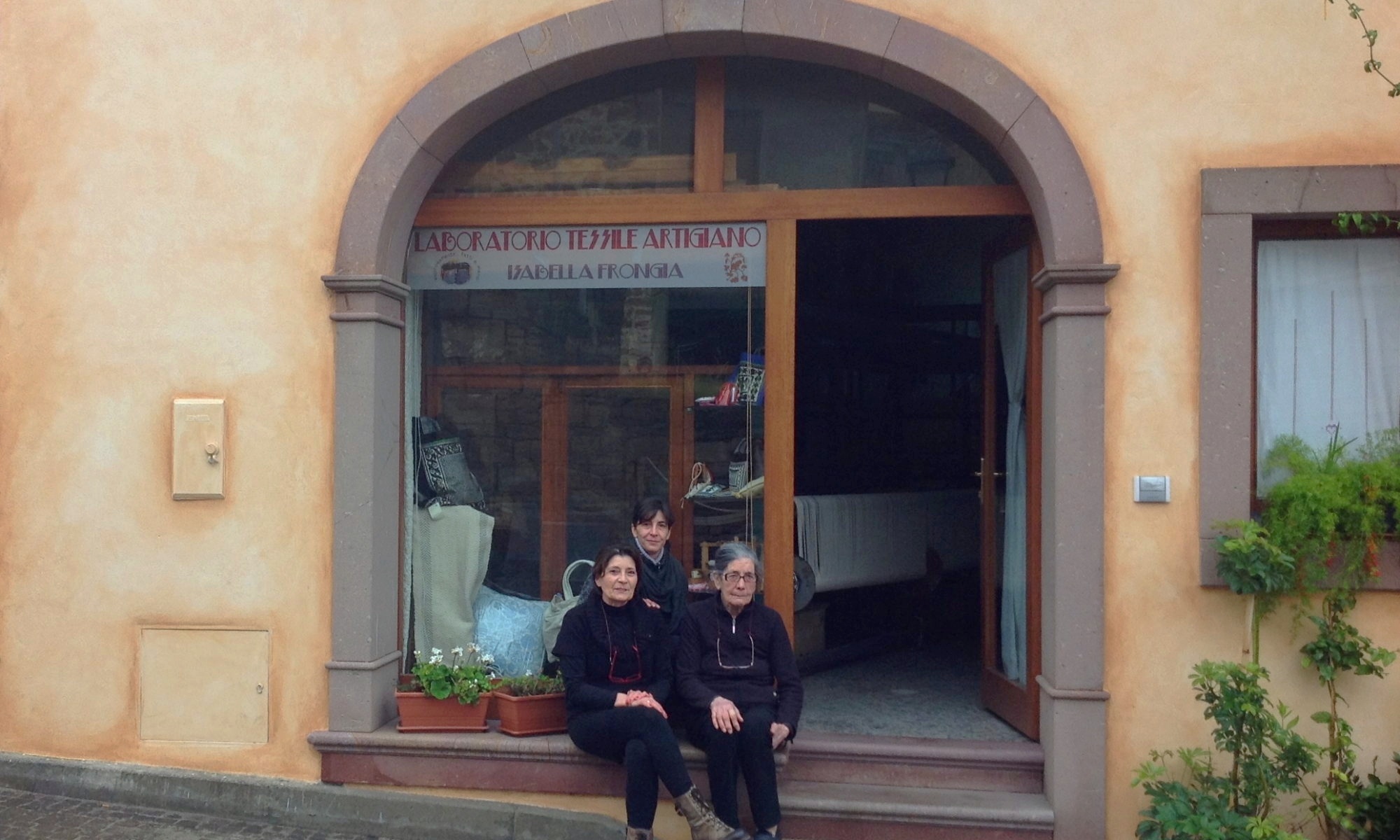
The women of Sardinian Arts & their piobiones style weaving (below)
8 – Musical boxes playing lullabies and instruments in Corsica.
Some very specialized craftsmen make instruments as they used to do in the old days or music boxes. Guitars, lutes, and harpsichords are made in Corsica (in Pigna) and other string instruments are restored. One artisan in the village of Pigna, Marie-Claire Darneal, hand-paints her music boxes with images of turtles, cows, pigs, horses, donkeys, or an entire cast of characters from “”A Moresca,”” an eighth-century ballad about Christian victories in the Mediterranean. Each music box delivers a traditional Corsican song. The one that stands out most is O Ciucciarella–a hauntingly beautiful lullaby.
To learn more about our Sicily bike tour check out:
{{cta(‘bfbd7785-da71-4778-a3e7-a3ee5e4e881b’,’justifycenter’)}}
And, for Sardinia and Corsica bike tours:
{{cta(‘0d88cf6b-8606-4e68-aa35-b73602f5bc89′,’justifycenter’)}}
