Feast Your Eyes on the Foods of Tuscany
Feast Your Eyes on the Foods of Tuscany
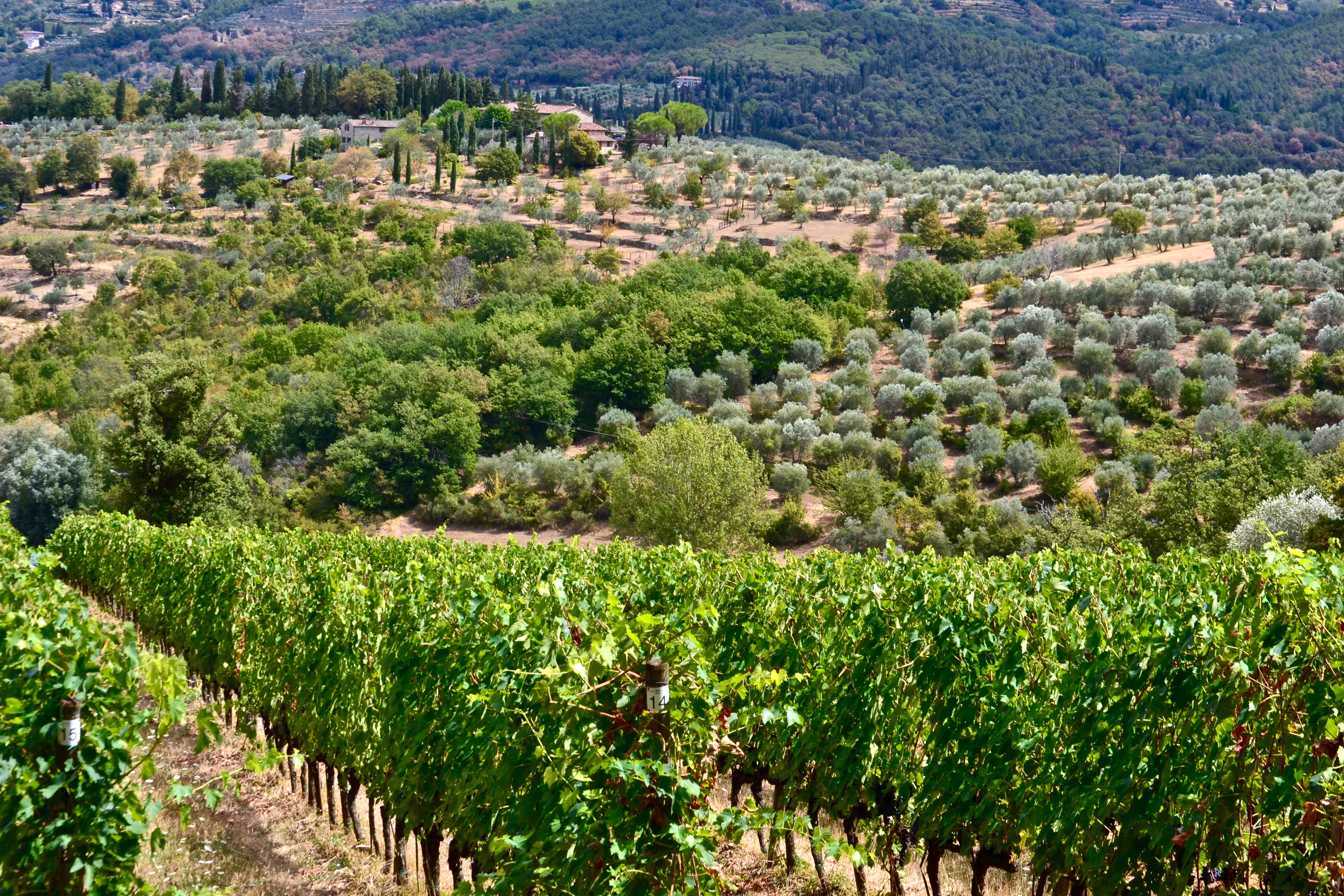
When cycling along gorgeous Tuscan roads on our Assaggio Toscana trip, guests often ask, “”What kind of crops are grown here?”” For centuries, the farmland surrounding Florence produced olive oil, wine, wheat, corn (though this was a new-world crop that probably didn’t become popular until the late Renaissance period) and fruit. Farms grew vegetables like artichokes, asparagus, spinach, cardoons, beans, and peas. Small estates also raised chickens, ducks, rabbits, and pigs, with locals making small hams and boar hams. Finocchiona (salami flavored with fennel seeds) is still a favorite. You would have found cows in the valley of Chianti and Maremma (closer to the sea). But because Tuscan cows are not raised to produce milk, there is little local cheese, other than pecorino (which is made with sheep’s milk). The surrounding woods are home to truffles, and a great quantity of mushrooms, including porcini, ovoli, and morels.
In Italian, we refer to Tuscan cooking as cucina rustica (rustic, country cooking) and it’s characterized by simple food that’s not overpowered by heavy sauces. Read on to learn more about this perfect cuisine.
In Tuscany, all the cooking is done with olive oil (no butter, which is used mostly in northern regions). Olive oil crudo is used as a salad dressing, poured over raw veggies and bread, and in soups and stews. Beans are also a staple. Sage, rosemary, and basil are popular spices. Grilling over vine embers and chestnut wood is preferred. The Florentine steak, grilled flat over an open fire and served rare, is a tradition tracing back to the Etruscans. There are paintings from as far back as the eighth century B.C. showing this practice. Chicken is also split, spiced, and broiled. Other meats and sausages are skewered before broiling.
Vegetable and bean soups like ribollita are very popular in Tuscany, as are bread porridges such as pappa al pomodoro.
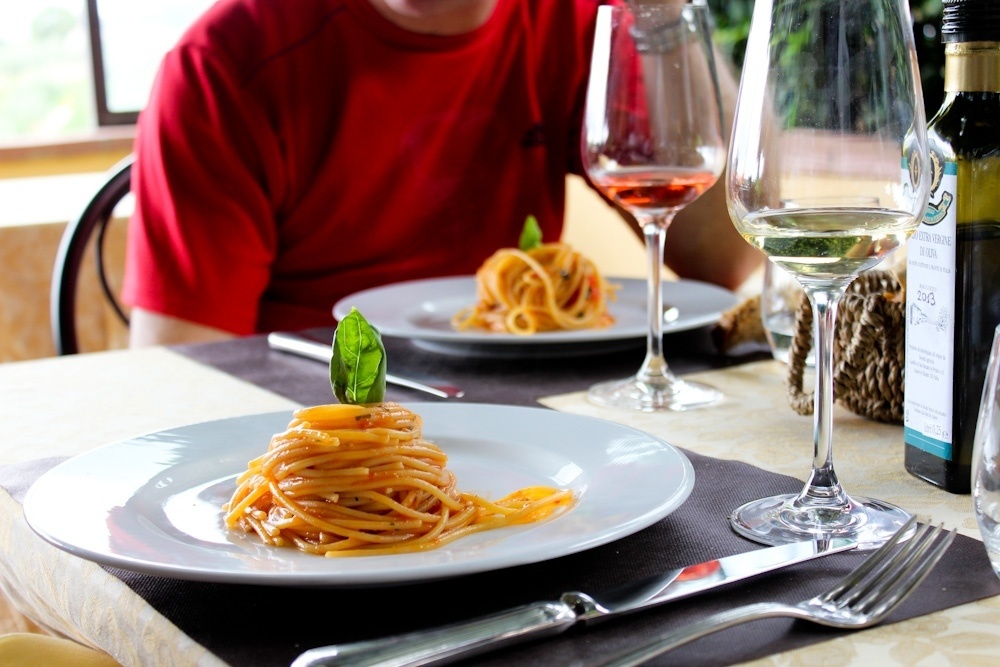 Tuscan food: freshness and simplicity at its best
Tuscan cooking really began to develop in the 1300s with the introduction of new spices. It soon became some of the most elegant in all of Europe. King Henry IV of France married Maria d’ Medici in 1599. Supposedly, Maria brought the secrets of Italian cooking and dining customs with her to France. Although the specifics are hard to pin down, there are some obvious Italian influences in French cooking (Shh! Don’t tell anyone). Sorbet, ice cream, fruits in syrup, pastry making, pasta forks, linens, and crystal glasses—these delicacies and details of everyday life are still important to modern Tuscans today.
PINZIMONIO
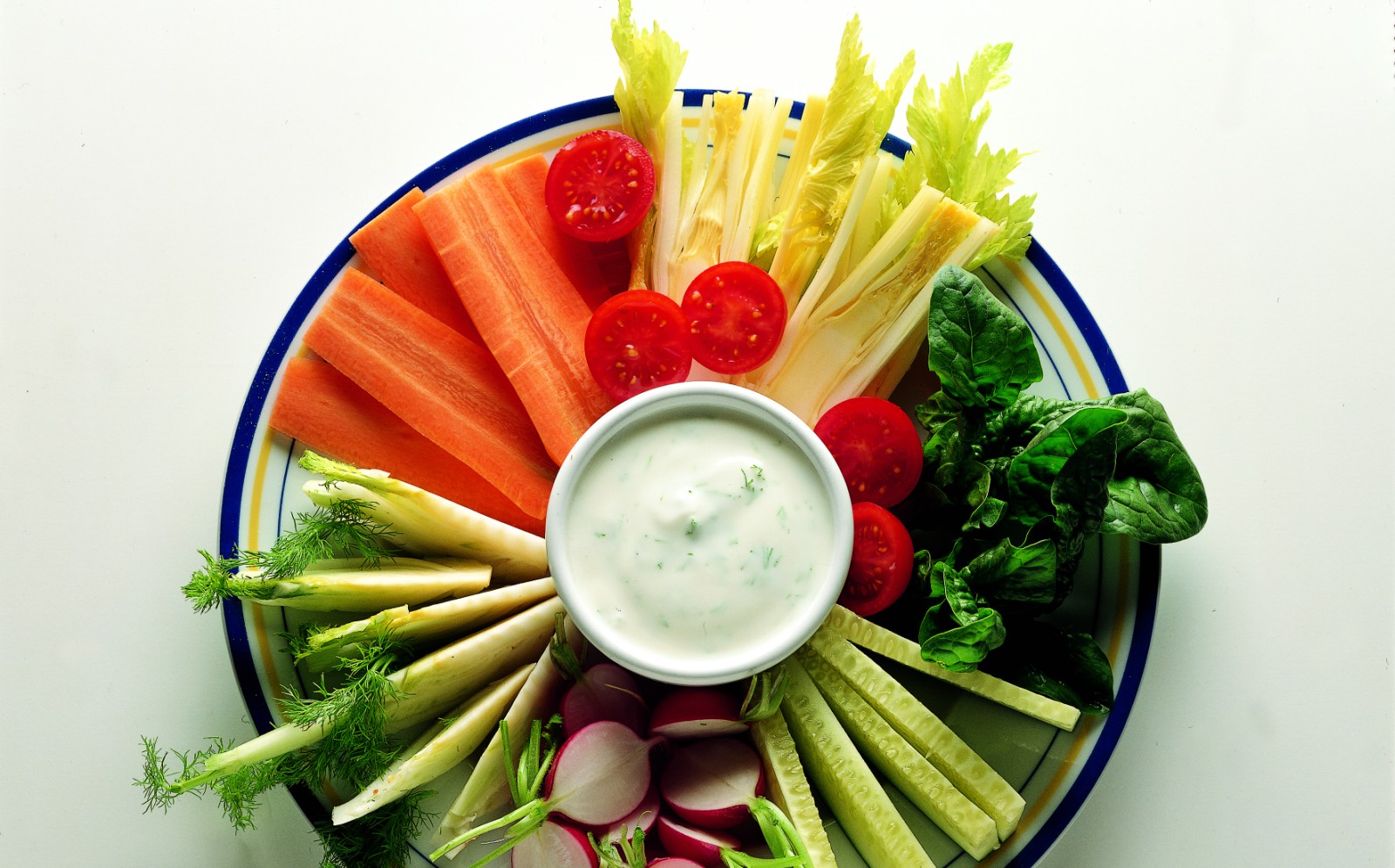
The word pinzimonio refers to the Italian habit of dipping seasonal raw vegetables into an olive oil sauce. Vegetables, like fruit, have been consumed by man as far back as pre-history. Vegetables were a part of the diet of all the ancient Mediterranean cultures, especially Roman. The Romans believed that the most virtuous citizens kept a modest, vegetable-based diet. During the Middle Ages, vegetables were considered a food of the common people and no longer appeared on the tables of the high courts of Europe, except for those in Italy where they continued to be valued. The birth of the pinzimonio came during the Renaissance, in Tuscany. At the time, raw vegetables were used to garnish more elaborate preparations and were consumed after dipping them into the sauces of the other dishes.
PANZANELLA
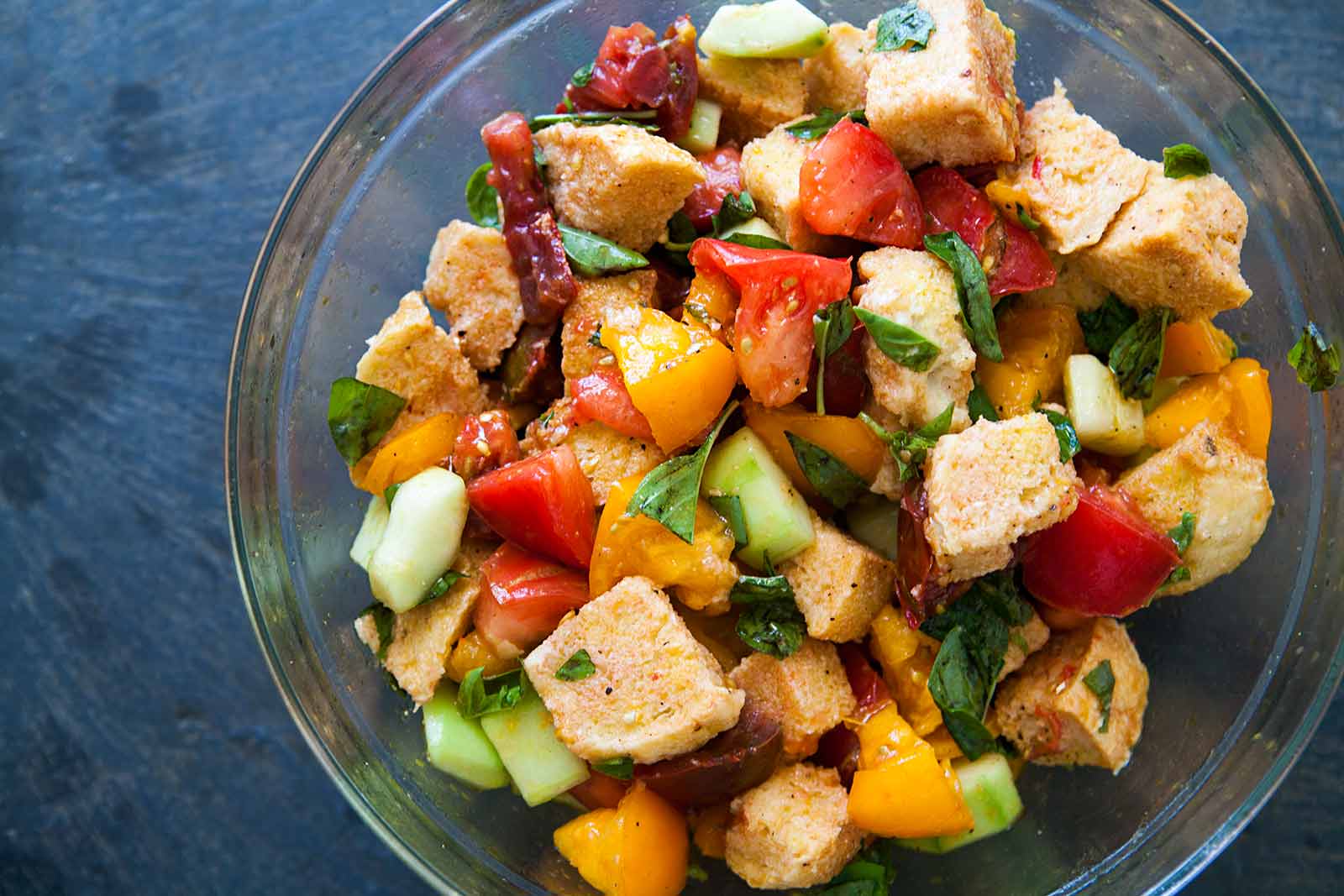
Mentioned by Boccaccio in the Decameron as “pan lavato” (or washed bread), panzanella is undoubtedly a rustic dish still made today in Tuscan homes, especially during the Summer. It is commonly believed that the dish developed out of the custom of contadini – or farmers – to soak their old, stale bread in water and mix it with vegetables from the garden.
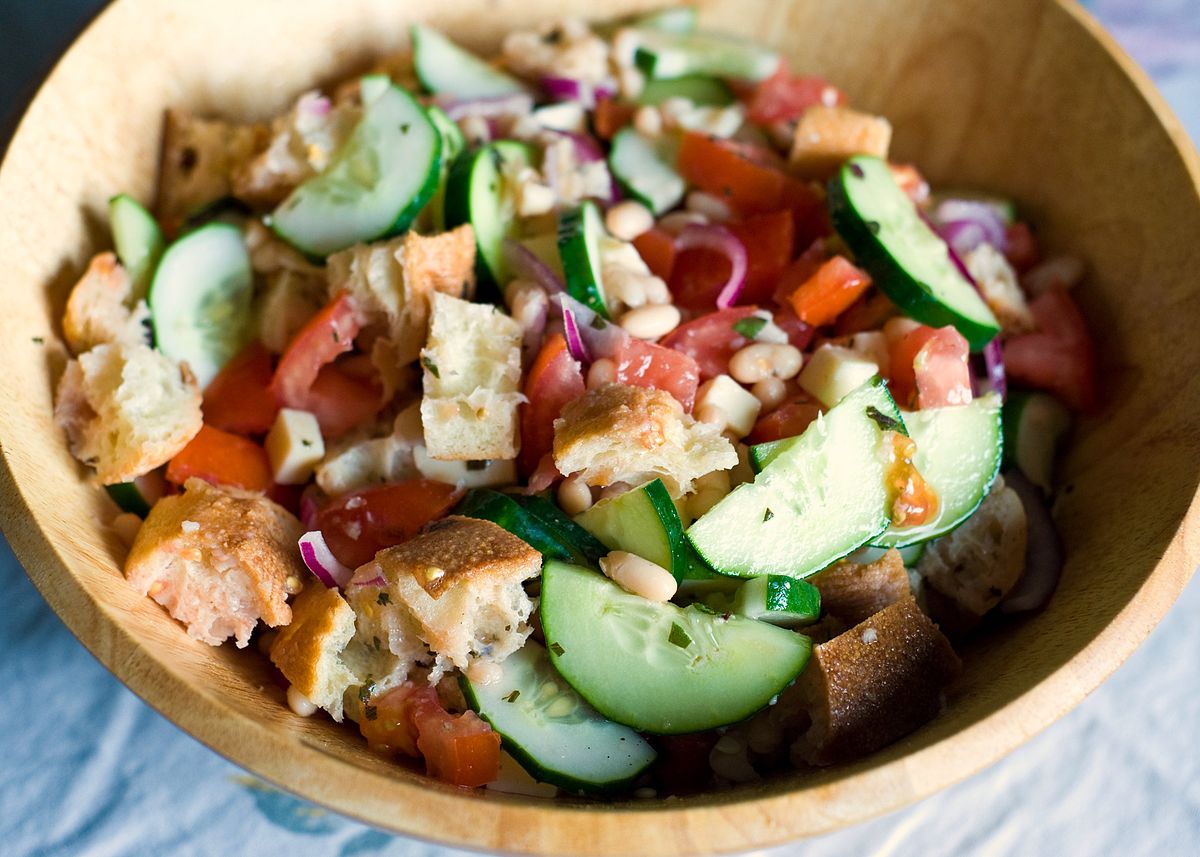
According to some, the word panzanella comes from the fusion of the words “pane” (or bread) and “zanella” (or soup bowl), while others believe it derives from the word “panzana” that originally meant “pappa” (or food). Regardless, panzanella has always been enjoyed by people of all social classes, demonstrated by the fact that Agnolo di Cosimo, an artist who frequented the Medici court, dedicated a sonnet to the dish in his book “Della cipolla”, published in the 16th century.
Another “noble” version of panzanella seems to have been served to Vittorio Emanuele, the King of Italy, by statesman Bettino Ricasoli, in 1865. At the time, the King was a guest in Ricasoli’s castle in Chianti (Castello di Brolio) for a hunting trip. The green of the basil, the white of the bread and the red of the tomato, recalled the colors of the newborn Italian Kingdom.
PECORINO CHEESE
This unique sheep’s milk cheese gets its name from the ancient city of Pienza, located just a few miles from Montepulciano. Pecorino di Pienza is considered the best pecorino produced in the Crete Senesi, a specific area within the province of Siena. Sheep were probably being raised in Tuscany since before the Etruscans and Pliny the Elder documented their presence during the Roman Age. Pecorino di Pienza, a favorite of Lorenzo il Magnifico, is a cooked-milk cheese made with whole, raw milk from sheep (Sarda breed or possibly Appenninica or Sopravvissana). The sheep are raised out in the open and graze exclusively on the local flora. The subtle hints of rare plants that grow in the clay soil of the Crete Senesi (wormwood, meadow salsify, juniper, broom) can be detected in the sheep’s milk.
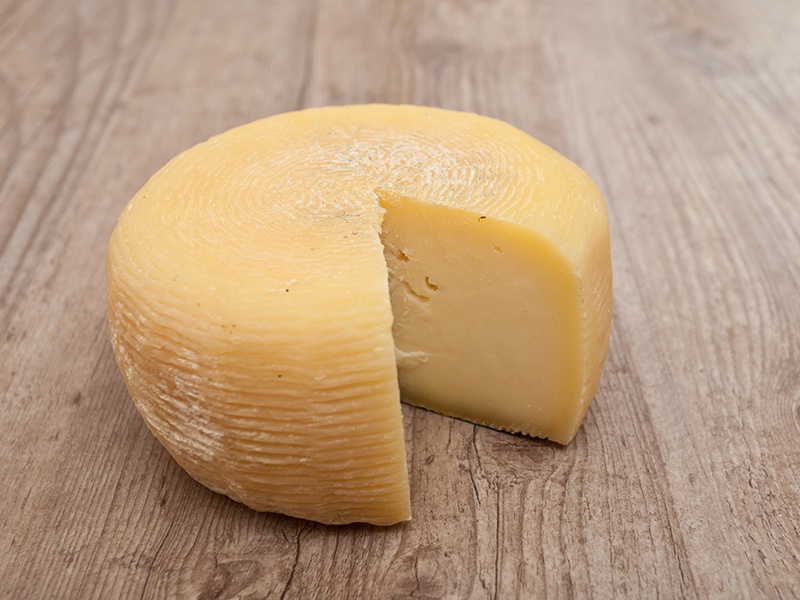
Once the fresh milk is added in, it is coagulated with veal rennet, or rennet made from the stamen of wild artichoke, marinated in vinegar and salt, or left to dry and then placed in warm water. The wheels of cheese mature in very humid cellars and periodically their walnut leaf-wrapped rinds are damped first with Tuscan olive oil, then with grease and wax. The round wheels can vary from 5.5 to 8.5 in. in diameter and from 2 to 4.5 lbs. After about 40 to 60 days the fresh cheese is ready to be consumed and has a soft, slightly spicy flavor. If left to age for five to twelve, or even eighteen (the best for grating) months, the cheese will have a 40% fat content, a full, long-lasting flavor. This aged cheese is not spicy, but has a tannic aftertaste and a soft, crumbly texture in the mouth. Pecorino di Pienza pairs perfectly with chestnut honey from Montalcino and and of the wines of the region, from Chianti to Montepulciano and Brunello di Montalcino.
{{cta(‘6e277ce1-2b0c-4e5e-9fd1-17aa00d5d14b’)}}
